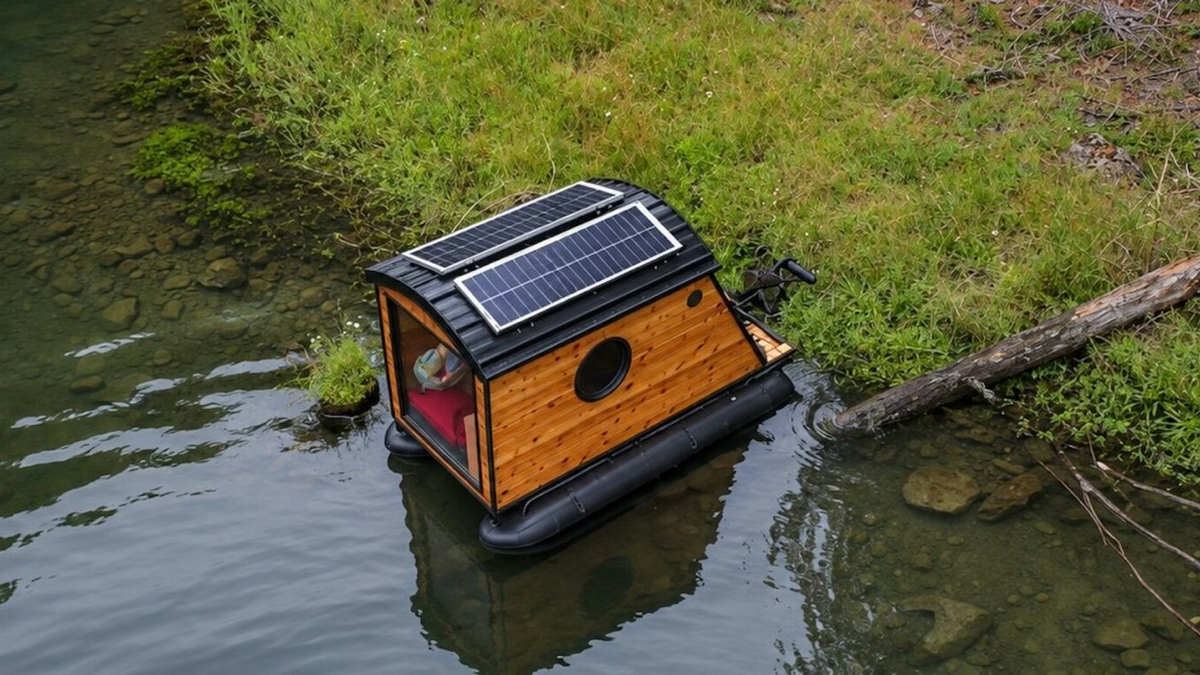
David Rule’s TinyTanic takes the idea of a cabin getaway onto the water. The wooden houseboat rests on two small pontoons and fits into a pickup truck bed, yet carries a sleeping space and a compact kitchen.
Rule documented the build and a three-day journey on Washington’s Pend Oreille River in a video published on 29 October 2026. It is a personal experimental boat, not a cabin stay offered for booking.
A cabin that shares its deck
The boat is eight feet long and three and a half feet wide. Rule assembled the pontoons from modular floats and built a lightweight cedar structure above them, with an aluminium roof, round side windows and a large transparent front panel.
Inside, the ceiling is only 42 inches high: enough to sit up, but not to stand. A sleeping platform occupies one side, while a narrow counter accommodates a sink, small refrigerator and single-burner stove.
A section at the rear does double duty. Open during the day, it forms usable deck space; a zippered cover encloses it at night and extends the sleeping area. This changeable boundary lets a very short boat accommodate a longer bed without giving up its entire exterior.
Solar power and its limits
Two 100-watt solar panels charge a marine battery that supplies the lights, fan and electric motor. The stove uses butane rather than electricity.
On the river trip, Rule found that the motor drew down the battery and turned it off at times to conserve power, using wind and current to continue downstream. The journey illustrates both the attraction of a self-contained floating cabin and the limits of a small onboard energy system.
Rule calls TinyTanic the world’s smallest houseboat, a claim that has not been independently certified. Its more tangible achievement is the way a sleeping area, galley and working deck fit within a single tiny structure.