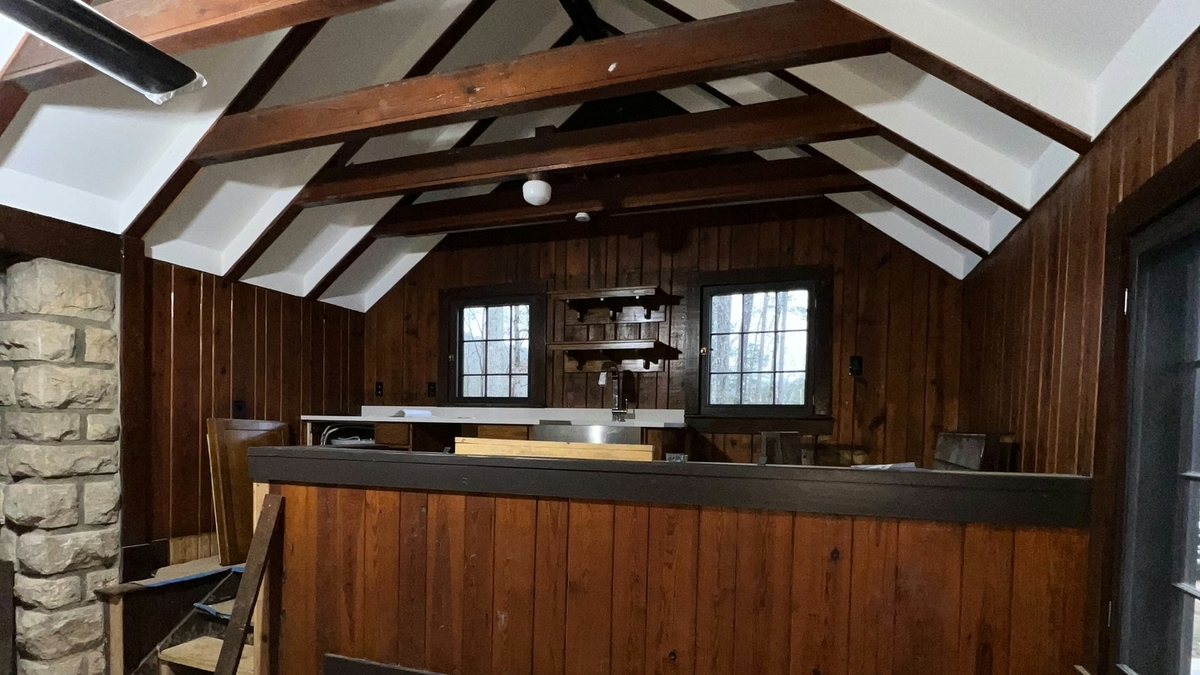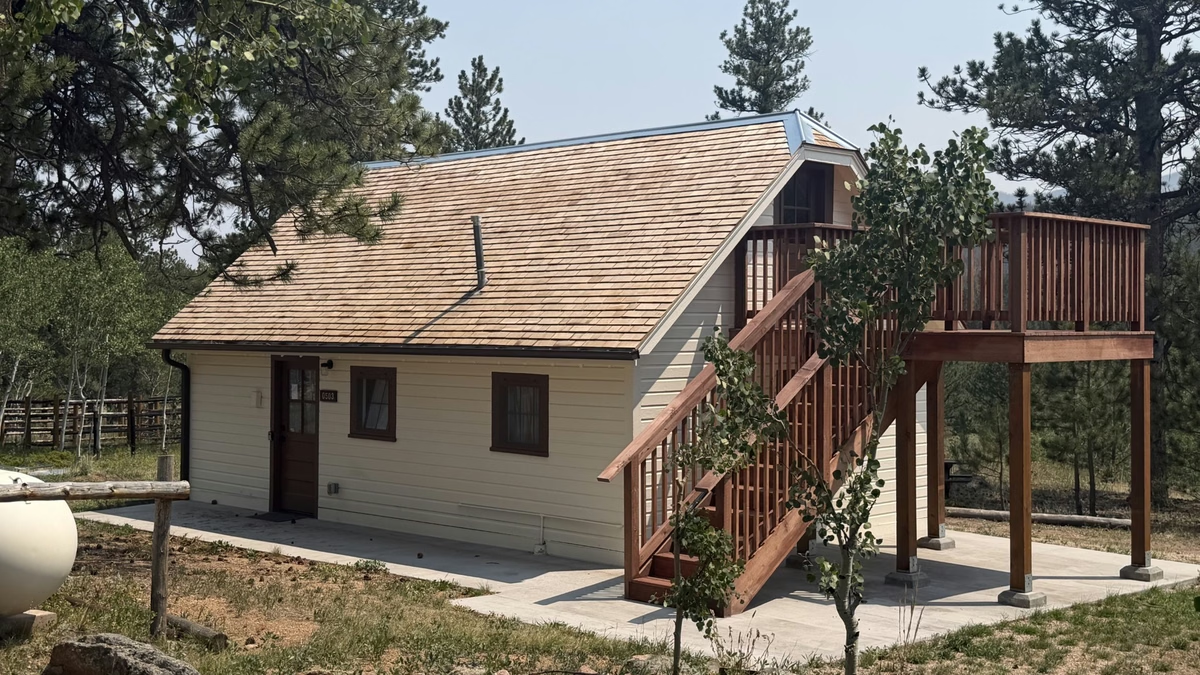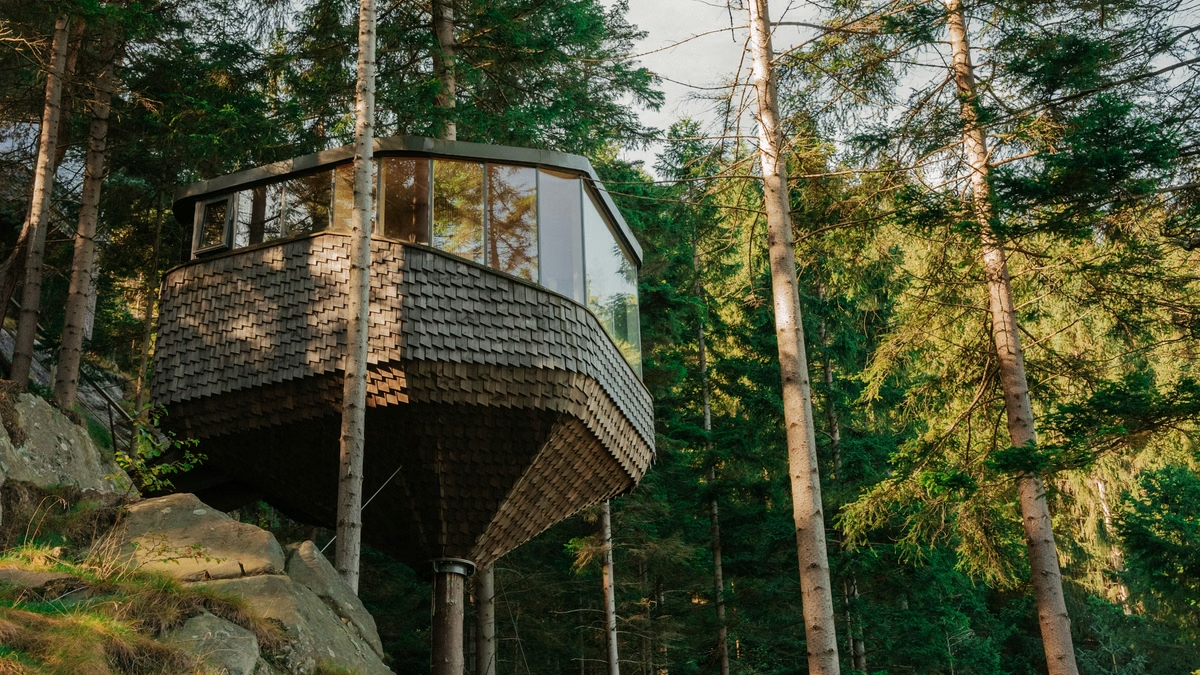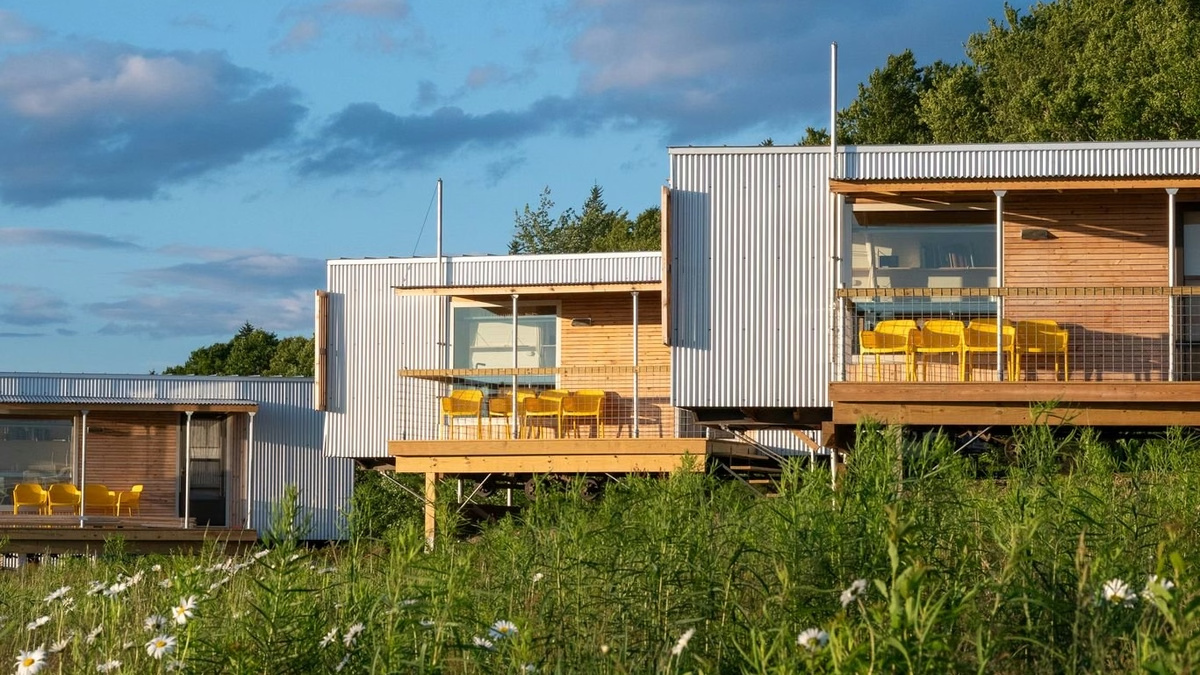
On a ridge in Orland, Maine, Lantern Camp takes a compact approach to a generous piece of land.
Its 24 cabins sit within a 166-acre property, with parking gathered in one area and walking routes leading into the surrounding landscape.
Rather than give each cabin its own isolated plot, the accommodation is grouped together. The idea is to create a place where guests can spend time outdoors without having a car parked beside every front door.
A village among the wildlands
The arrangement matters as much as the cabins themselves. Lantern Camp says its site plan draws inspiration from Monhegan Island’s “village and wildlands” model: concentrate the built parts of a place and leave more room around them.
According to the operator, two acres of the property are lightly developed. That is the camp’s own description, not an independent assessment of its environmental impact.
Still, the plan raises an interesting question for cabin design: how can a place accommodate guests while making the landscape, rather than the buildings, the focus of the stay?
At Lantern Camp, part of the answer is a shared parking area and a network of routes that encourages guests to explore on foot.
Field or forest?
There are two main types of cabin, divided evenly between the field and the woods.
The field cabins have private bathrooms. The forest cabins use a shared bathhouse. Both types are listed with full kitchens, so guests can prepare meals rather than plan every day around eating out.
The choice is practical as well as aesthetic. A field cabin offers more facilities behind your own door; a forest cabin brings a shared building into the daily routine.
One field cabin is listed as accessible, with an accessible kitchen and bathroom. Guests with specific access needs should confirm the details directly with Lantern Camp before booking.
The bathhouse and sauna
The bathhouse sits among the forest cabins and contains three full bathrooms. It is built largely from cedar and also houses a sauna with a window looking into the woods.
The sauna is available for booked sessions, according to the operator, and carries a separate charge. Guests should check current availability and conditions when planning their stay.
For anyone considering a forest cabin, it is worth understanding the arrangement before booking: the shared bathhouse is part of the experience, rather than a private bathroom attached to each cabin.
Can cabins close together feel private?
In a visit published on 28 October, Field Mag raised a question about the layout: can cabins grouped together still feel secluded?
Its reviewer found that the orientation of the buildings and the placement of their windows made the interior feel private, even when neighbouring cabins appeared close from outside.
It is an observation that goes beyond this particular property. Privacy in a cabin is not only a matter of how much land surrounds it. The view from a window, the position of a porch and the route someone takes past the building can all change how a space feels.
A base for exploring Maine
Lantern Camp is in Orland, in eastern Maine. The location puts both Acadia National Park and the Blue Hill Peninsula within reach.
Field Mag describes them as less than 50 minutes away, although the actual journey depends on the destination and traffic. For guests planning a day out, it is worth checking the route rather than treating every point on the coast as equally close.
The property also has its own walking trail. Lantern Camp recommends carrying water and insect repellent, and guests should check conditions before setting out.
That gives a stay here two possible rhythms: a day exploring beyond Orland, or a quieter one spent closer to the cabin.
A different measure of space
The appeal of a cabin is often described in terms of distance: how far it is from a town, a road or another person.
Lantern Camp offers a slightly different perspective. Its buildings are grouped together, while the broader property provides the setting for walks, views and time outdoors.
Concentrating development does not, by itself, establish how sustainable a project is. But as a piece of cabin planning, it is an alternative to giving every stay its own large parcel of land.
Here, the landscape is not just what sits outside the window. It is also the starting point for how the cabins have been arranged.