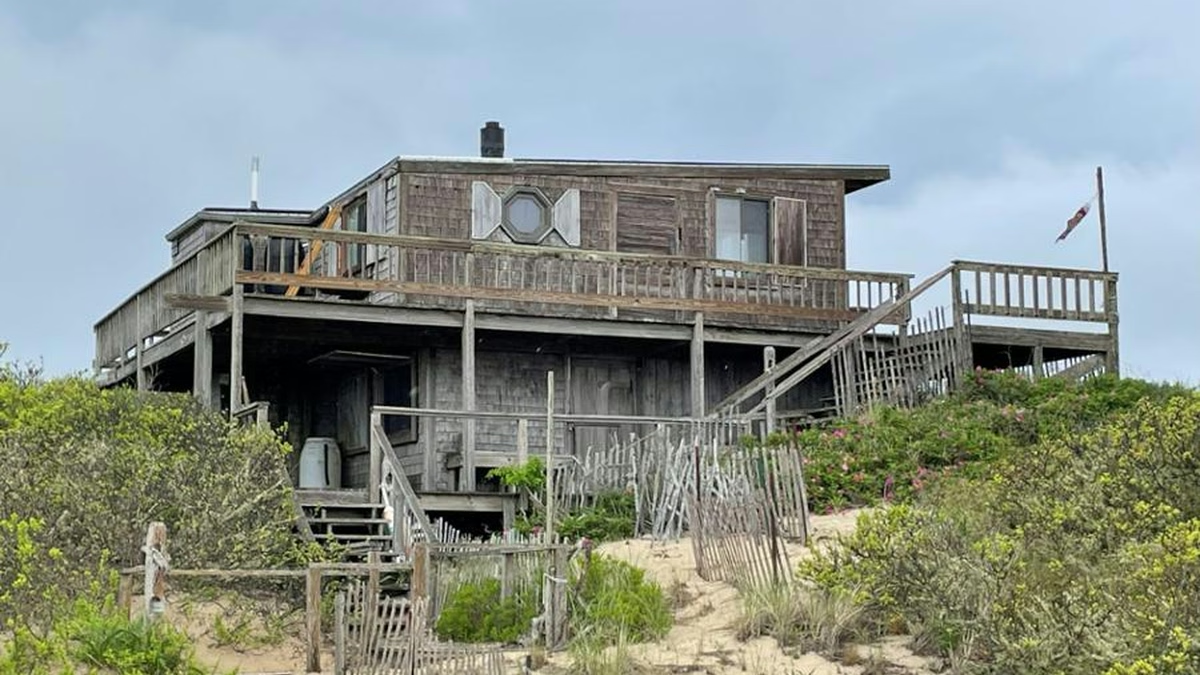
A historic shack tucked into the dunes of Cape Cod is looking for its next steward. The National Park Service has opened a competition to lease Armstrong Dune Shack, a remote property in Truro, Massachusetts, for private residential use.
The opportunity is not a conventional holiday rental. The proposed lease lasts up to ten years, and the successful applicant must maintain the weathered building and take on repairs while respecting its historic character.
The initial deadline for proposals is January 8, 2027, at 5 p.m. Eastern time. The park service says the competition is open to interested individuals and organizations.
A home within a historic dune district
Armstrong stands in the Peaked Hill Bars historic district within Cape Cod National Seashore. The district’s scattered dune shacks are part of a landscape shaped by shifting sand, and the park’s preservation and use plan guides their continued occupation and care.
According to the solicitation, Armstrong is the easternmost shack in the district, around half a mile from its nearest neighbour. Its upper level contains the living space; a partial lower level is used for service and storage. A deck wraps around the building.
The location brings practical limits. There is no paved road to the property: access is on foot or by a suitable four-wheel-drive vehicle on an inner dune route. Motor vehicle access requires a park-issued off-road-vehicle permit and appropriately aired-down tires.
The cost of keeping the shack in use
The first year’s fair-market rent is $10,250, subject to annual consumer-price-index adjustments. Rent is only one part of the commitment: the lessee must also carry insurance and pay for maintenance, repairs and replacements during the lease.
The shack is offered as-is, with all faults. It has no commercial electricity, municipal water or sewer connection, and conventional utilities will not be extended to it. The solicitation describes a wood stove, water storage and other simple systems used by occupants.
One required change concerns sanitation. The existing gravity-fed toilet and buried receptacle cannot remain in use; the lessee must replace the system with an incinerating toilet or another acceptable alternative that meets applicable environmental rules.
The park service requires the property to be occupied and maintained as a traditional dune shack. Subleasing is not permitted, so the offer should not be mistaken for permission to operate it as a short-term rental.
How the competition works
The park service will consider the proposed use, protection of the historic property, financial capacity, relevant experience and environmental measures among its criteria. Applicants should consult the full solicitation and sample lease rather than assume that a strong rent offer alone settles the decision.
Site tours are offered by appointment during the week of December 7, 2026, subject to availability. The initial deadline for questions is December 16. The solicitation also provides for rolling Friday submission deadlines after the initial date until a selection is made.
Selection is anticipated about eight weeks after the submission deadline, with the lease expected to begin in late spring 2027. Both are estimates rather than guarantees.
For anyone drawn to the setting, the distinction is important: this is a long-term stewardship proposal for a historic structure, not a bookable cabin stay. The responsibilities are part of what keeps that use compatible with the surrounding national seashore.
Photo: National Park Service. No claim to original U.S. Government works.