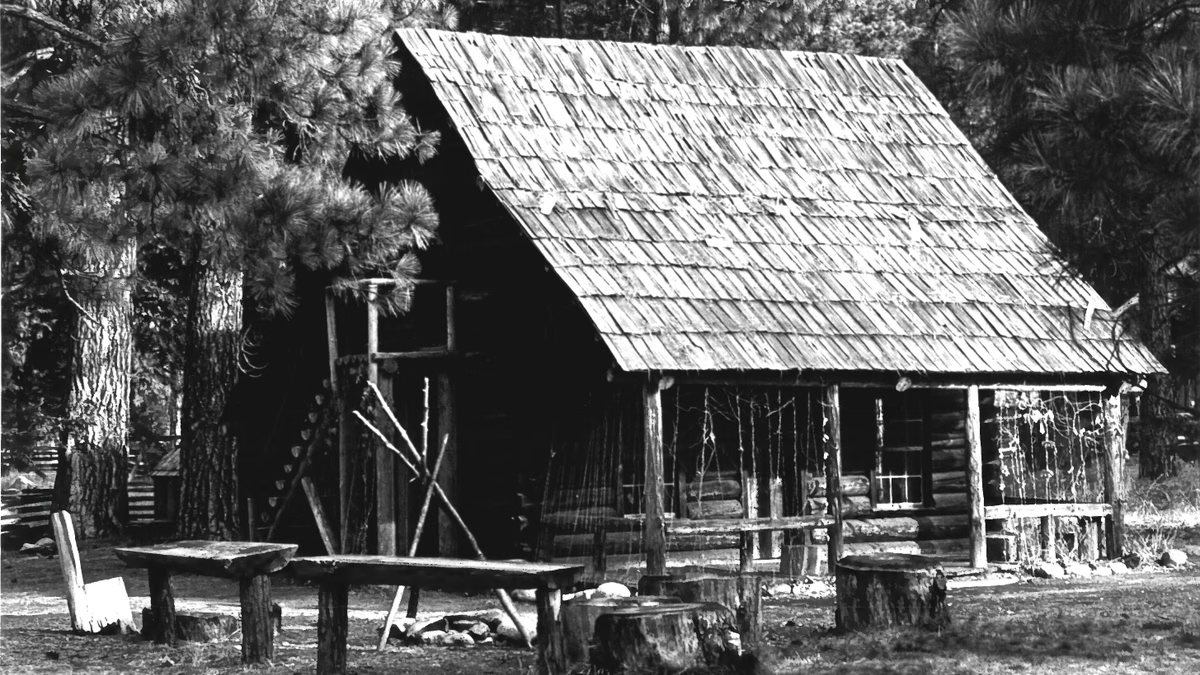
A two-storey log cabin at Yosemite’s History Center began its life far from Wawona. Built in 1879 in Aspen Valley, the Hodgdon Homestead Cabin later travelled across the park to become part of a collection of historic buildings.
Its story is not a new opening. Recent attention has brought the old cabin back into view, but its connections to ranching, early tourism and the creation of the national park reach back generations.
A cabin built for a working landscape
Thomas ‘Tom’ Hodgdon acquired land in Aspen Valley for grazing cattle. According to the National Park Service, he hired Chinese American cowboy Ah Hoy and neighbour Franklin Babcock to build the two-storey cabin, alongside work on an access road.
The Hodgdon family brought cattle to the high country in summer from their home in the foothills. The cabin served a working landscape rather than the recreational setting visitors might associate with Yosemite today.
That arrangement changed after the area became part of Yosemite National Park in 1890. Grazing restrictions ended the family’s use of the meadows, and soldiers enforcing park rules sometimes sheltered inside the cabin.
From cattle to travellers
The family adapted as travel through Aspen Valley grew. The access road was improved by Chinese workers as part of the Great Sierra Wagon Road, which was extended toward Tioga Pass for silver mining.
The Hodgdons developed additional buildings for visitor lodging, and Eliza Hodgdon sold hot meals to travellers. The modest homestead thus became connected to a wider network of roads and accommodation in the mountains.
A second life in Wawona
The cabin was relocated to Wawona around the turn of the 1960s. A 1975 National Park Service photograph records its south-facing side at the history center, with a broad pitched roof and a porch in front.
It now belongs to a collection of buildings moved to Wawona from different parts of Yosemite in the 1950s and 1960s. Outdoor interpretive signs introduce the people and activities connected with them; seasonal exhibits and demonstrations vary, so visitors should consult current park information before a trip.
The cabin is a historic exhibit, not an accommodation booking. Its journey makes visible how the same building can hold the histories of a family home, an early visitor economy and a national park’s preservation work.